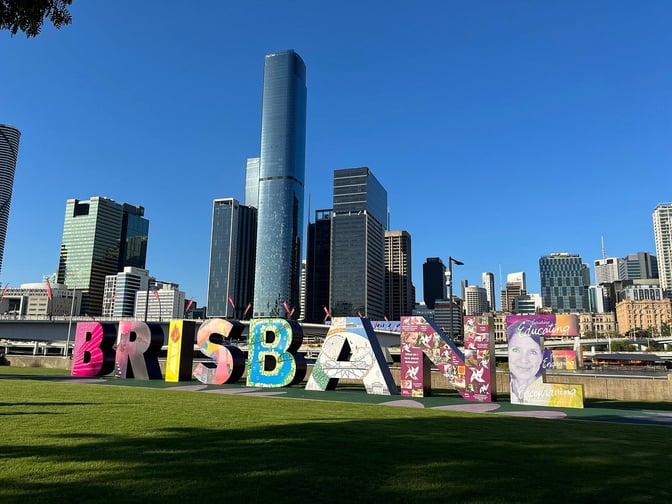
James Green isn't just opening Flint's Brisbane office. He's redefining how the brokerage operates.
His vision is simple, but deliberate: strip away friction, back brokers properly and build a workplace where performance isn’t slowed by paperwork.
"I’m passionate about building a culture where brokers feel empowered, not buried in admin," Green told Australian Broker. "We’re creating an environment where high-performing brokers can focus on what they do best: building relationships, giving advice and moving quickly, while being backed by real infrastructure and support."
After merging FPW Group, which he founded roughly seven years ago, with Sydney-headquartered Flint Group, Green now leads Flint’s first Queensland location, spearheading the firm’s expansion into Brisbane at a time when the market is accelerating.
In this two-part edition of Australian Broker's Spotlight Series — where we showcase standout professionals across Australia's mortgage and finance industries — Green shares his perspective on Brisbane’s momentum, opportunity and what it takes to build a high-performance brokerage from the ground up.
The following interview has been edited for grammar and clarity.
JG: We’re seeing more activity compared to this time last year. Confidence has improved, especially among buyers who were sitting on the sidelines waiting for clarity around rates.
It’s not a frenzied market, but it’s a more considered one. Clients are asking better questions and thinking longer term, which is healthy.
JG: I expect 2026 to be active, but selective. Growth will continue, but it won’t be uniform across all segments or locations. Well-advised buyers and investors will do well.
JG: One challenge is managing expectations. The property market has evolved with transactions moving very quickly, tighter contract terms being needed to secure properties and days-on-market decreasing. It is very important to be prepared and have the right people on your team to move quickly and take advantage of an opportunity when it pops up.
JG: Brisbane is still a relationship-driven market, but it’s maturing quickly. Compared to Sydney or Melbourne, it’s historically been more affordable, which has attracted both interstate buyers and investors. What’s different now is the pace of change. Migration, infrastructure and lifestyle demand are accelerating things faster than many people expected.
JG: Brisbane is in the middle of a once-in-a-generation growth phase. With the Olympics on the horizon and significant investment reshaping the city, the opportunity here is enormous. Our long-term vision is to position Flint Brisbane as the brokerage built for what the city is becoming — not what it used to be. We want to be the trusted partner for people navigating growth, investment, relocation and major financial decisions in a rapidly changing market.
JG: I’m passionate about building a culture where brokers feel empowered, not buried in admin. We’re creating an environment where high-performing brokers can focus on what they do best: building relationships, giving advice and moving quickly, while being backed by real infrastructure and support. Flint’s model removes friction and opens doors. It’s built for scale and designed for modern expectations. In a fast-moving Brisbane market, clients expect pace and precision and that’s exactly what we’re building.
JG: The key is staying disciplined. Volatility isn’t new; what changes is how people react to it.
For clients, my advice is to focus on fundamentals: cash flow, buffers, structure and long-term goals. For brokers, it’s about preparation, understanding policy shifts early, stress-testing scenarios and communicating clearly. At Flint, having a large support and credit team behind us allows brokers to stay ahead rather than reactive.
AB: What other trends are you seeing in the market at the moment?
JG: We’re seeing more sophisticated conversations around structure, tax and long-term planning, particularly from investors. There’s also a growing focus on lifestyle-driven decisions, especially from interstate movers. People want homes and strategies that support how they live, not just what looks good on paper.