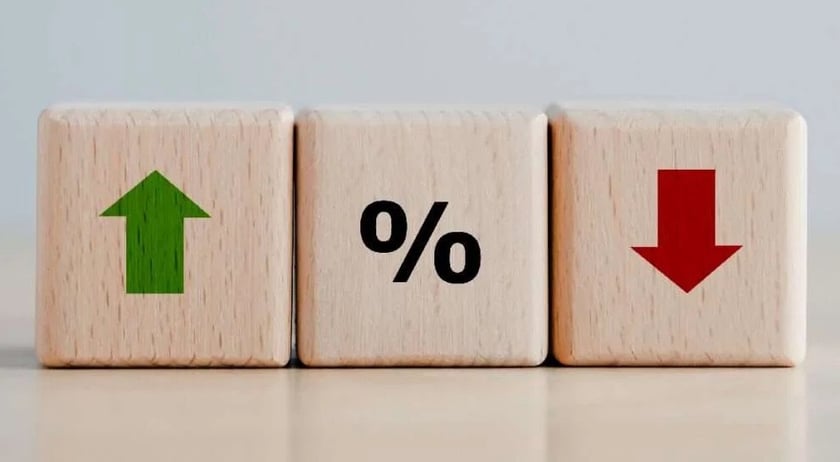
All talk turns to interest rates ahead of the Reserve Bank of Australia's (RBA) upcoming meeting on monetary policy.
Australia's central bank is set to convene next Monday and Tuesday, 4 and 5 of May, to discuss the next move on interest rates. While it is widely-believed that a reduction of the official cash rate (OCR) is unlikely, markets are still divided as to whether the bank will hold the current rate of 4.10%, or increase in an effort to tame ongoing inflation.
The March consumer price index (CPI) confirmed that inflation continues to be on the rise Down Under, partly driven by rising oil prices linked to conflict in the Middle East. While all four of Australia's Big Four banks are betting on a rate increase this month, not everyone is convinced. Inflation came in slightly softer than some forecasts, fuelling debate over whether the RBA may ultimately opt to hold.
Australian Broker spoke with brokers nationwide to gauge sentiment and assess what the RBA’s decision could mean in the short term.
Broker at Brisbane-based The Happy Finance Company
"Heading into the upcoming RBA meeting, I think a rate increase is very much on the table. Inflation has come down from its peak, but some of the underlying pressures, particularly in services, are proving stubborn. So the RBA is likely to stay cautious to avoid cutting things too fine.
In the short term, another hike would reinforce the idea that rates could continue to hike or stay higher for longer. For borrowers, that mostly shows up through their borrowing capacity, which in turn may lead to a lower capacity to purchase, as lenders adjust serviceability and pricing in the background.
On the ground, I’m already seeing some buyers look to move sooner, particularly those sitting close to their maximum borrowing limits. As rates creep up, lenders reduce the maximum loan sizes they’ll offer, which can narrow options pretty quickly. The silver lining is that a few lenders will still honour existing pre‑approvals for up to three months. So timing and strategy really matter, and that’s where good advice makes all the difference. In the housing market, higher rates are stretching affordability. But in Brisbane and Southeast Queensland, strong population growth and a shortage of supply are keeping demand resilient. A few real estate agents I speak with have said property prices are still holding up. However the competition isn’t as strong as we’ve seen recently, where most places were selling immediately with multiple offers. Things aren’t running hot, but they’re far from going cold.
Refinancing is definitely front of mind for borrowers, and many are actively shopping around for a better rate. That said, the conversations we’re having go beyond just chasing the lowest headline rate. Our focus is on improving cash flow and using loan features like offset accounts, redraw and other features outside of the loan itself to help clients save money over the longer term, which often delivers a better outcome than rate alone. In a higher-rate environment, the structure and features of the loan really matters. Overall, borrowers are adjusting to higher rates."
Founder, managing director and senior broker at Perth-based Focused on Finance
"At this stage, I'm leaning towards a rate hike being the likely outcome at the next RBA meeting. We have been fielding a large volume of calls, enquiries, from clients about fixed rates due to fears and uncertainty around interest rates, and I think this will only increase with another rate rise. I don’t see [a rate rise] stopping the constantly increasing house prices in the Western Australian market. But I think it will slow down the speed that they are increasing as affordability is becoming a real issue.
We are seeing an increased volume of refinancing activity, which is likely to increase further as rates rise. Whereas the volume of purchase applications has significantly reduced. But I believe this is more influenced by the extreme low levels of stock available in the WA market."
Director and finance broker at Sydney-based Xcel Finance
"I'm a bit torn on whether we’ll see a hike or a pause at the next RBA meeting. Most economists and banks are leaning toward a hike and suggesting that further tightening is still on the table. That said, a softer-than-expected inflation read opens the door for a [potential] pause. That said, I do think a pause might be more wishful thinking. Inflation is still a very real concern, and if it’s not brought under control, the longer-term consequences for consumers are significant with higher prices for everyday essentials, interest rates staying elevated for longer and increased pressure on businesses, which can ultimately lead to job cuts. Inflation really is a beast that needs to be tamed. Although it sometimes feels like Australia relies too heavily on rate rises as the primary tool to manage it.
If we do get another increase, I think most Australians will cope. We’ve proven to be quite resilient, particularly coming off the back of the 14 rate rises post-COVID-[19]. However, it will continue to impact confidence and is already affecting borrowing capacity, which is a growing concern.
At the moment, the majority of our borrowers are investors, who are largely competing with first-time homebuyers in the more affordable segments of the market. While activity has been very strong and we’ve been busier than ever, we’re increasingly shifting toward more solution-based lending strategies to help clients navigate tightening serviceability constraints. People are still ready for sure to jump into the market. It's just harder to help them achieve their goals."
Mortgage and finance broker at Brisbane-based 360 Mortgage Solutions
"I do think there will be a rate hike. I think it is unavoidable given the inflation. The main issue [in the near-term] will be borrowing power decreasing. This is an issue when the cost of homes are going up and borrowing power is going down. I personally have seen a lot of clients buying with parents and dual living as a way of still getting into the property market, in a property that will suit their needs with the lowered borrowing power. I can see this becoming more of an option [if rates go up], especially for first-time homebuyers who don't have a large income and therefore borrowing power. In Brisbane, I still see a supply and demand issue here with my pre-approved clients. I don't see rates going up helping that issue.
I have a lot of borrowers still looking to purchase, and just as many looking to move their lending to a better offer. The main issue I see is when it comes to investors or upgraders, they typically can not afford to purchase for the amount they want to."