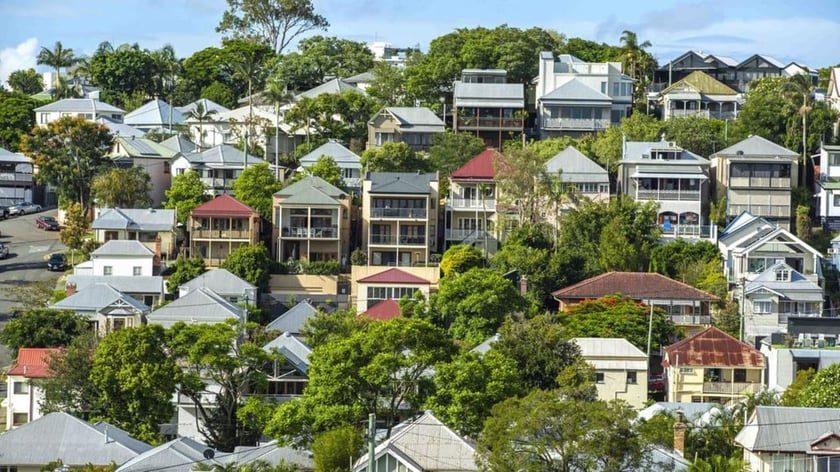
Queensland’s Boost to Buy homeownership scheme is back for round two. But so is the scramble for first-time homeowners to get into an already crowded market.
"There's definitely a lot of a lot of demand; there's a lot of people moving up from Melbourne and Sydney," James Green, director and finance broker at Flint Group Brisbane, told Australian Broker. "And then the supply of dwellings coming on the market is definitely nowhere near enough for the people trying to buy that for sure."
Gerard Burg, head of research at Cotality Australia, added: "Queensland has long attracted retirees from other states, and, until recently, offered buyers some more affordable markets compared with other major cities."
The result has been increased prices across Brisbane’s outer suburbs and Southeast Queensland, intensifying competition.
"Places like Morayfield and Springfield and Ripley, which have had some incredible growth," Green said. "And Gold Coast has now become one of the most unaffordable places to live. There's a lot of people also moving to the Sunshine Coast."
The growing appeal of Southeast Queensland, combined with lower barriers to entry, is making it harder than ever to break into the property market. At the same time, prices across Queensland continue to climb amid a national housing shortage, pushing more would-be buyers beyond their price range. The median property price in Queensland grew 14.1% in the 12 months ending in March 2026, year-over-year, according to the PropTrack Home Price Index. In the same time frame, Brisbane was up 17.7%.
Even so, demand hasn't eased. This month, the Queensland housing scheme opened its second round of applications, offering up to 500 places across Southeast Queensland and regional areas for first-home buyers.
Recipients of the program can buy their first home with as little as a 2% deposit, while the Queensland government provides an equity contribution of up to 30% for newly built homes and up to 25% for existing properties. Borrowers can purchase a property valued at up to $1 million.
To qualify, borrowers must use an approved lender, plan to live in their home, be an Australian citizen or permanent resident, over the age of 18, buy an existing property or newly-built resident, and have a maximum annual income of $150,000 (or $225,000 for couples.)
"Obviously, when you increase the demand in the million-dollar and below price bracket, it becomes even harder to buy houses in that price bracket because there's just so much competition," Green said. "It's putting a lot of heat on the market.
"The shortage is going to take a very long time to be absorbed," he continued. "I don't think [the government] is going to be able to really get ahead of the curve, especially with just the sheer volume [of houses needed.]"
For Queenslanders who are still eager to get into the property market — and into the Boost to Buy program — Green said to move fast.
"We're still seeing some houses sell within 48 hours of an open home," he said. "It's been happening since the end of last year and the start of this year. It's just definitely got hotter and hotter.
"It used to be a 14-day financing period," he continued. "But we're seeing a lot more sellers wanting unconditional contracts, or very short finance clauses, which comes from a very hot and high demand market. Because people are offering shorter contract terms to try and make their offer more favorable."