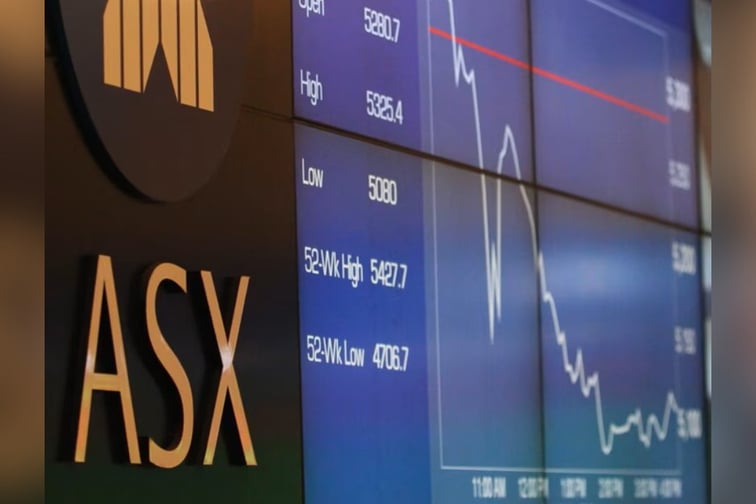
Despite markets bracing for tighter policy, the Reserve Bank of Australia (RBA) still managed to rattle sentiment Tuesday after it delivered its third consecutive rate hike in 2026. The S&P/ASX 200 slipped 0.2% to 8,680, marking its lowest close in 20 days, as a result.
In the widely-watched move, the nation's central bank lifted the official cash rate (OCR) by 25 basis points to 4.35%. The decision came with a decisive eight-to-one vote, underscoring the board’s firm stance on inflation.
Attention now turns to how market participants interpret the shift, and what it signals for the path ahead. Australian Broker caught up with a few key players to hear their thoughts.
Head of Australian economics at ANZ
"Our expectation remains that the board will pause in June. By August — in the absence of a rapid resolution to the conflict in the Middle East and a resumption of oil flows — we expect the activity data in Australia to be looking sufficiently soft to keep the RBA on hold. That said, risks would now appear more skewed to a rate hike in August than prior to this meeting given the ongoing focus on capacity pressures and the more hawkish tone than we anticipated in the post-meeting statement."
Senior economist at REA Group
"With inflation expected to remain elevated, there is a strong possibility that interest rates could move even higher in 2026. For mortgage holders on variable rates, this will add further pressure to already stretched household budgets. Higher interest rates are also reducing borrowing capacities, which is already placing downwards pressure on home prices."
Chief economist at Ray White
"The challenge is that Australia’s inflation problem is still heavily tied to housing. This is the difficult policy trade-off. Higher interest rates can slow demand, but they do not build houses, lower construction costs or increase rental supply. In fact, higher borrowing costs can make new housing projects less viable and discourage private investors, potentially adding to the rental shortage over time.
For property markets, the impact will be mixed. Higher rates will reduce borrowing capacity and weigh on buyer demand. But Australia’s housing shortage remains severe. Strong population growth and weak construction activity mean prices and rents are likely to remain supported, even as higher rates slow momentum.
The RBA's message is clear: inflation control remains the priority. But the longer-term solution to Australia’s most persistent inflation problem will not come from interest rates alone. It will come from more housing supply, lower construction barriers and policies that encourage, rather than discourage, rental investment."
Head of Australian economics at Commonwealth Bank of Australia (CBA)
"We affirm our view of the RBA [will be] on hold from here in the remainder of 2026. We see the risks lie to another hike in August, but [that] will be dependent on the data flow. The main watch points are: federal and state budget decisions, wage outcomes, Q2 [20]26 trimmed mean inflation and the path of consumer spending.
From here though, we do expect the RBA to remain on hold. Our base case forecasts see the RBA cutting the cash rate twice in 2027. But there is a high degree of uncertainty over the path from here. [The] third rate hike in a row should be enough to bring inflation down."
"Another rate rise is difficult news for borrowers already managing higher repayments and broader cost-of-living pressures. Inflation remains above the RBA’s target band, but the latest data also shows that much of the recent increase has been driven by fuel and global price pressures. That makes this a challenging environment for both policymakers and households."
Interim chief executive officer and managing director of the Finance Brokers Association of Australia (FBAA)
"[The current environment is] a toxic mix of pain and devastation. Surely driving investors out of the market while at the same time increasing interest rates can only result in increased mortgage repayments and higher rental prices.
I'm not an economist. But it’s not rocket science that this affects lower income earners more than anyone else. These are not economic factors beyond our control, but decisions that are directly leading to darker times for many, and I hope both the RBA and federal government can change course before it’s too late.”
Economic director at online platform Compare the Market
"All of the rate cuts homeowners enjoyed last year have officially been reversed. These hikes will have a huge impact on household budgets. If the first two didn’t, this third one will really scare people. For people who were already living up against their limits, and for recent homebuyers unfamiliar with higher rates, I think this is really going to hurt.
We have seen massive growth in property values over the past few years in most of our capital cities. I think that boom era may be coming to an end. Rate cuts last year, as well as [government] support like the Home Guarantee Scheme, gave a lot of new buyers confidence to enter the market, sometimes with much smaller deposits than what would have historically been required.
Now rates are on the way back up; we’re likely going to see lenders tighten the amount people can borrow, and that’s going to have a big impact on aspiring borrowers who can’t stump up a big deposit. And anyone considering their next home purchase, whether they are upsizing or rightsizing, might have to think twice about their budget, because the repayments on average loans are [going to be] a lot higher."
Executive director at aggregator group Connective
"Today's rate increase was no surprise. The RBA is still trying to rein in inflation as price pressure in housing and services remains particularly high. The resilience of the labour market is giving the RBA room to stay restrictive, despite ongoing geopolitical tensions and market volatility.
“For borrowers, this will mean higher repayment pressure and closer scrutiny of household spending, with behaviour becoming more cautious as budgets are stretched. As borrowing capacity tightens, many will be seeking guidance not just on rates, but also on options, including loan structuring, lender comparisons and scenario modelling. In this environment, brokers should move early and stay close to their clients. As lending decisions become more complex, the broker’s role becomes even more valuable."
Chief executive officer of Mortgage Choice
"Today's decision by the Reserve Bank to lift the cash rate for the third time this year has been widely anticipated by the Australian finance sector. For households already grappling with two rate hikes, and the increase in fuel prices, this third consecutive rise will no doubt sting. Mortgage Choice home loan submission data reveals that borrowers are already responding to climbing rates and chasing a better deal on their mortgage. Over the last two months, demand for refinance has been trending up, with refinance representing a greater share of overall submissions. What’s most telling about our submission data is the uptick in demand for fixed rate home loans, which tells us that borrowers are looking for certainty."
Senior lecturer in the department of economics at Monash Business School
"While higher petrol prices have pushed inflation up, they are not the primary driver behind this move. Instead, the key factors are persistently strong underlying inflation — evident even before the Iran-related oil shock — and a very tight labour market. In that environment, higher interest rates are the appropriate response to bring inflation back under control.”
Co-founder and managing director at online home loan rate comparison platform Rateseeker
"From the RBA's perspective, this isn’t the time to take the foot off the brake and risk reversing progress that's already been made. For borrowers, this is where the rubber hits the road. Another interest rate hike means higher repayments and tighter borrowing capacity for borrowers. The time is now to look at your own financial position and review your buffers, your offset balance, living expenses, your loan structure and what you’re planning over the next 12 to 24 months."