
Australia’s housing affordability challenge has deep structural roots – and solving it will take more than slowing construction costs, according to Ray White chief economist Nerida Conisbee (pictured).
“Building more affordably will only happen if construction costs or land prices fall – they remain stubbornly high,” Conisbee said.
While building costs are beginning to moderate from their pandemic-era peaks, persistently high land prices – especially for development sites – continue to keep new housing out of reach for many buyers.
Recent ABS data showed the construction sector stabilising, with Q1 2025 completions up 1.6% to $24.27bn and 7% year-on-year. Oxford Economics’ Michael Dyer said output remains below what’s needed, except in social housing, keeping pressure on prices.
There is some good news on the cost of building.
“At their peak in mid-2022, construction prices were rising by more than 25% annually in some states,” Conisbee said. “Now, most states are seeing annual increases of less than 5%, with Victoria actually recording slight price declines.”
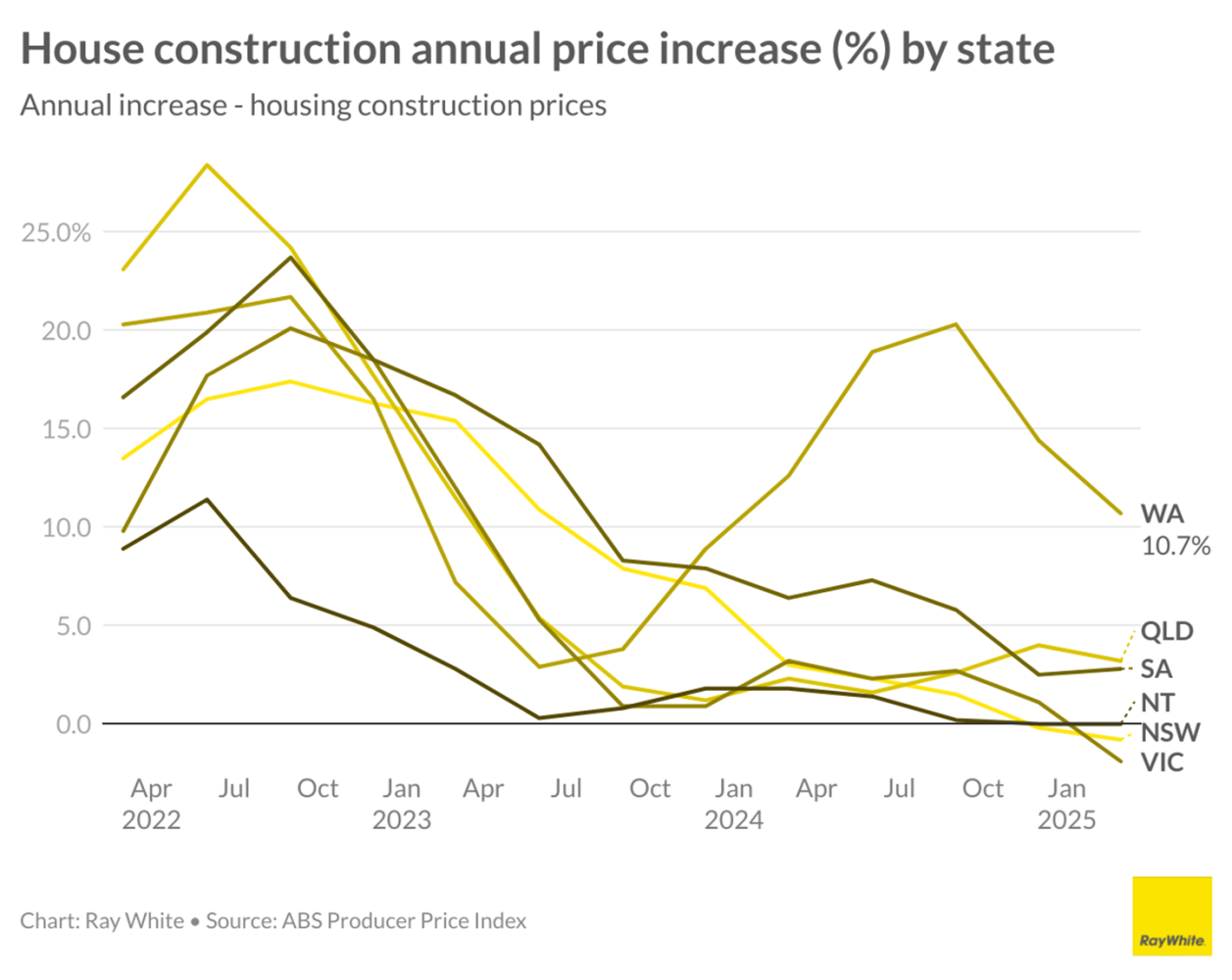
However, she cautioned that falling inflation doesn’t necessarily translate to affordable building.
“Moderating doesn’t mean affordable. Even with these improvements, construction costs remain elevated from their pre-pandemic levels,” Conisbee said.
New research from Compare the Market showed four Australian cities had the world’s biggest annual jumps in construction costs. The Gold Coast topped the list with a 7.4% rise in the tender price index (TPI), followed by Brisbane (7.1%), Townsville (6.9%), and Adelaide (6.4%).
An even bigger issue is the cost of land, which continues to defy economic expectations.
“Despite interest rates rising from near-zero to over four per cent in less than two years, owners of development sites aren't being forced to sell. In fact, the opposite is occurring,” Conisbee said.
Analysis of 3,864 development site transactions over the past five years reveals the median price has soared from $4.8 million in 2020 to $8.5 million in 2025 – a 75% increase, despite aggressive interest rate hikes.
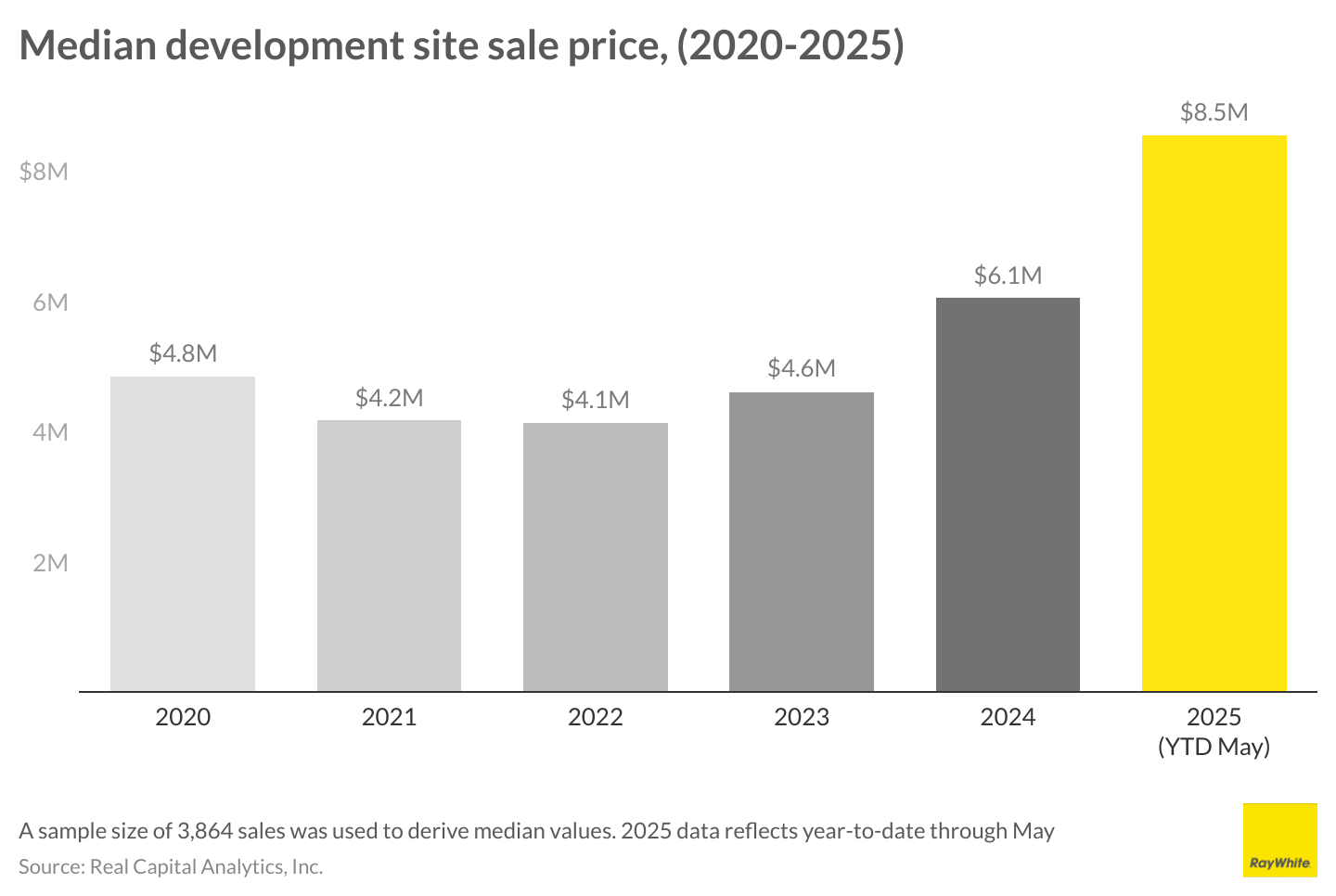
Several key structural shifts in the development sector explain the resilience of land values:
Investors used the ultra-low interest rate era (2011-2022) to build equity and lock in long-term low-cost funding.
“Rather than rushing to sell in a difficult market, many landowners are adopting alternative strategies...or simply waiting for conditions to improve,” Conisbee said.
Non-bank lenders, institutional investors and foreign capital have provided new flexibility compared to previous cycles dominated by major banks.
“Post-GFC regulations have made lenders more systematic about managing distressed assets, leading to more patient approaches,” Conisbee said.
This structural shift has created a tough climate for developers, many of whom are holding onto sites that are no longer financially viable to build on.
“Developers can’t start projects because the numbers don’t work, which means less housing supply, which keeps prices high,” Conisbee said.
Without the usual market pressure to bring prices down during downturns, affordability remains a major challenge.
“The mechanisms that previously created price corrections during economic downturns – while often painful – also periodically made land more accessible for new development,” Conisbee said.
As traditional market cycles fail to bring relief, she warned that solving Australia’s affordability crisis may require a more proactive and policy-driven approach.