Inflation rose slightly in August, reducing the potential for further interest rate cuts in the near term.
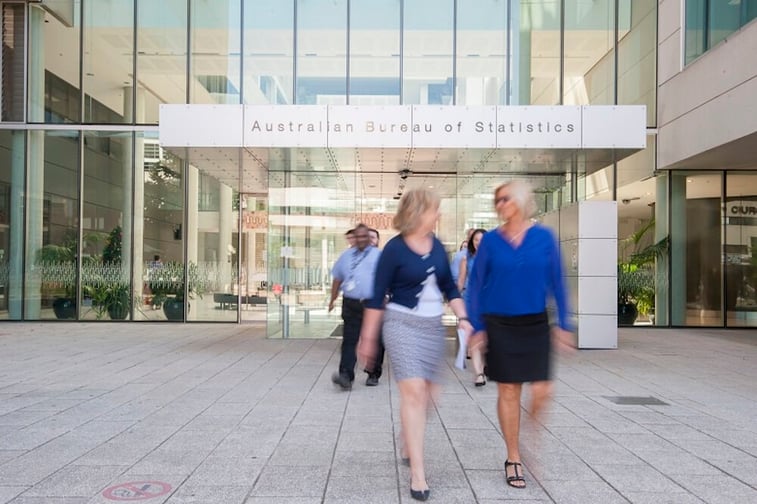
The Australian Bureau of Statics (ABS) released its monthly consumer price index (CPI) indicator on Wednesday, showing that headline inflation rose 3% in the 12 months leading up to August, month-over-month.
Meanwhile, the annual trimmed mean inflation — which strips out items with volatile price changes and what many consider to be a better indicator of underlying inflation — fell to 2.6% in August, down from 2.7%. This month's trimmed mean inflation print excluded the annual rise in electricity prices.
Although the figures remain well within the Reserve Bank of Australia's (RBA) target inflation range of 2% to 3%, economists continue to anticipate that the central bank will refrain from easing monetary policy at this month’s meeting.
"The underlying components suggest our suspicion that the inflationary pulse in the economy had firmed in Q3 2025 is likely correct," Harry Ottley, an economist at Commonwealth Bank (CBA), wrote in a note.
Over at ANZ, Adam Boyton, head of Australian economics, said: "Consumer spending is lifting, although measures of confidence remain soft; and business conditions and forward orders are around long run average levels. All this together means the case for lower interest rates may end up less compelling than market pricing suggests."
Boyton added that key economic indicators — such as the Q3 CPI report, September jobs report and housing spending figures — will help determine the RBA's next move.
"Depending on how those data land, it is possible that the meeting might end up a very close-run thing," he said.
Both ANZ and CBA expect the RBA to hold the official cash rate (OCR) steady at 3.6% this month, before cutting it by 25 basis points during the November meeting to 3.35%. National Australia Bank (NAB) has also jumped on board, forecasting a pause in September followed by a rate cut in November.
As the winter months draw to a close, the latest monthly CPI showed that housing costs rose higher than expected, up 4.5% in August, on top of a 3.6% increase in July. Meanwhile, new dwellings — which includes new builds and major renovations — climbed 0.7% in August, compared with a 0.4% rise in the 12 months leading up to July. In addition, new dwelling prices rose 0.4% in August, the same as July, thanks to price hikes from home builders and fewer discounts and promotional offers in some cities.
"While 0.4% [month-over-month] is not overly elevated, it is materially firmer than in late 2024 and early 2025 when prices were falling, significantly aiding the disinflationary process," Ottley said.
Rent, meanwhile, rose just 3.7% in August, compared with a 3.9% uplift in July. That's the lowest annual growth rate since November 2022, and is consistent with vacancy rates across many of Australia's capital cities.
"We expect rent inflation to continue to ease in annual terms going forward as population growth normalises and the rental market rebalances," Ottley said.
Other monthly increases were in alcohol and tobacco, and healthcare.
The RBA slashed the benchmark interest rate by 0.25% in August, the third time the bank has eased monetary policy thus far in 2025. But RBA Governor Michele Bullock was quick to point out that the board is taking a cautious approach, opting to wait for additional economic data before making any further moves on rate cuts.
The latest quarterly CPI data — which is considered a more accurate gauge of inflationary pressures — confirmed that both headline CPI and trimmed mean inflation continue to trend downward. Meanwhile, unemployment has edged up slightly in recent months, but remains historically low at 4.2%.
As recently as 22 September, Bullock said the economy is in “good shape,” but also warned that stronger-than-expected consumer spending could fuel inflation and push back the timeline for rate cuts. Consumer spending rose by two points in the final week of August, according to the ANZ-Roy Morgan survey, before slipping for two consecutive weeks in September. Meanwhile, mortgage holders and investors alike await anxiously for further rate relief, as the cost of living climbs and the housing market remains squeezed by limited supply and rising property prices.
"The key takeaway from today's data is that a November cut is not a done deal," Ottley said. "Tension is building in the economic data flow in Australia."
The RBA meets for its next meeting on 29 and 30 of September.