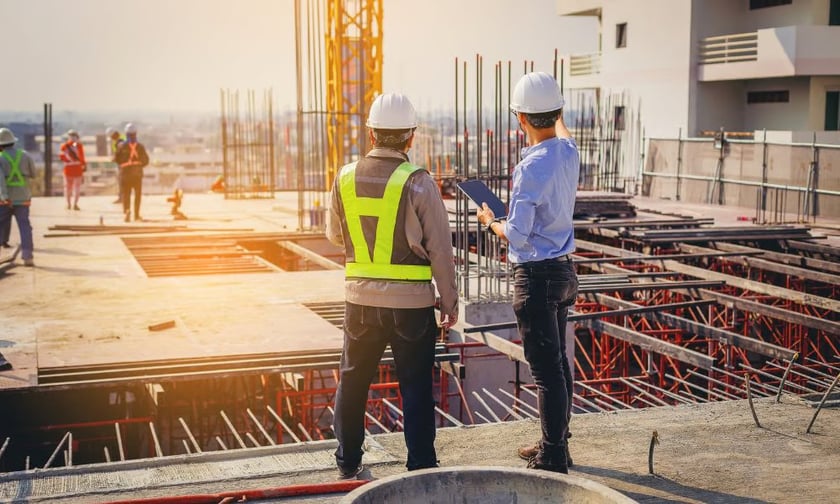
House building cost pressures are approaching their highest levels since 2023, according to Master Builders Australia (MBA).
Shane Garrett, chief economist at MBA, pointed out that the cost to build a new house saw a 1.2% increase during the September 2025 quarter – the biggest quarterly jump recorded since December 2023. He added that compared to the pre-pandemic period, it was now 44.8% more expensive to construct a new house.
Garrett said the 2.1% increase in the price materials over the year to the September 2025 quarter has played a part in the rising cost of building houses. Materials that saw the largest increases in prices were concrete, cement, and sand products. Over the past year, cement product prices increased by 3.2%. Only steel saw a decline in prices during the same period, dropping 4.6%.
“This is the fastest pace of cost increase since late 2023, meaning house building material costs have surged by a total of 37.9% since just before the pandemic,” said Garrett.
“The deterioration in house building costs hurts the viability of new home building projects,” he added.
MBA CEO Denita Wawn said that the current prices served as an obstruction to Australia’s aim to reach the Housing Accord target, which was to build 1.2 million new homes over the course of five years, starting from 1 July 2024. Notably, there had already been a 60,000-home building deficit during the first full year of the National Housing Accord’s term.
“Every cost increase pushes more projects out of reach and makes it harder to meet the Housing Accord target,” said Wawn.
Wawn also stated that solving the problem of building cost inflation cannot be done in one move. Instead, she underlined the importance of coordinated reform across planning, skills, taxation, and energy to properly address the issue.
“Master Builders continues to call for a national approach to cut red tape, strengthen supply chains and lift productivity across the industry,” said Wawn, adding the need for stronger training pipelines and employer support.
What are your thoughts on the story? Share your insights in the comments below.