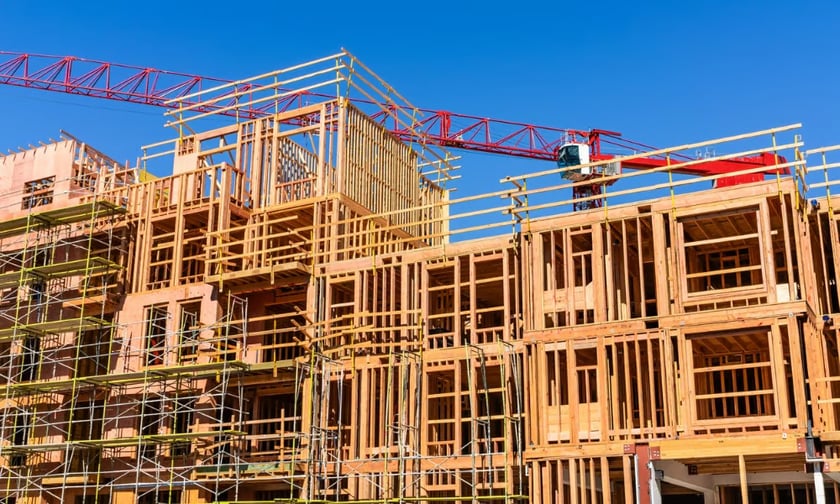
Australia’s push toward modular and prefabricated housing has strong government backing – but the path to affordability remains challenging, according to Building 4.0 CRC CEO Mathew Aitchison.
Speaking at the Perth Property Congress, Aitchison said modern methods of construction (MMC) have huge potential to boost productivity and lower costs, but Australia must avoid copying overseas models wholesale, Property Council reported.
“I’m going to give a slightly cautious answer to what was a very enthusiastic question,” he said. “Firstly, I don’t think there is a single answer around the world. Secondly, I think we’ve got an immense amount to learn from all of these other countries, I think we also have to be very cautious about the way we apply those lessons in Australia.”
The discussion comes amid intensifying affordability pressures, with Cotality data showing that one in three Australian housing and unit markets now have a median value above $1 million — a record high. The surge in seven-figure suburbs underscores the widening gap between property prices and household incomes, reinforcing the need for innovative, cost-efficient construction to improve housing accessibility.
Aitchison said countries like Sweden, Japan, and the United States provide valuable insights into how industrialised construction can work – but warned against direct imitation.
“We don’t have those capabilities in Australia in that form. So, we can learn a lot of lessons from them, but we have to be very measured about the way we apply them,” he said.
“All I’m saying is to the very many people that I meet that say, let’s just do what Sweden is doing. Pump the brakes a little bit on that.”
Despite growing enthusiasm for modular housing, Aitchison said cost remains one of the industry’s toughest obstacles.
“I think we need to focus more on construction costs. I think we need to focus more on getting productivity up,” he said. “Today, I heard one of our colleagues on stage… talking about how it’s currently more expensive to use modular. That has been our experience around the country.”
Cotality’s latest Cordell Construction Cost Index (CCCI) showed a 0.6% rise in national construction costs in the September quarter, with annual growth at 2.5%. While the pace of increases has eased to its lowest level in over two decades, costs remain around 40% higher than pre-pandemic levels, continuing to weigh on project feasibility and housing affordability.
While modular builds can make sense in remote and regional areas, where access and logistics justify the expense, urban applications remain difficult. “We need the post and plate to get up and running and become a mass system where we can leverage the full power of manufacturing,” Aitchison said.
Despite the cost challenges, Aitchison said Australia has a real opportunity to innovate through partnerships and new construction technologies.
He pointed to successful projects such as Building 4.0 CRC’s collaboration with Cedar Pacific in Melbourne, which uses mass timber systems, and work with Homes NSW, which he called “world leading.”
“I’m very optimistic, very bullish about our opportunity to innovate in this country. So I’m exceptionally buoyant and optimistic about what we can achieve,” he said.
Get the hottest and freshest mortgage news delivered right into your inbox. Subscribe now to our FREE daily newsletter.