
Australian mortgage brokers are facing a more cautious but still active borrower market, as the latest ABS and Westpac reports reveal a soft December spending result, rising rates, and stubbornly strong house price expectations.
Seasonally adjusted household spending slipped 0.4% in December after solid gains of 1% in November and 1.4% in October, but remains 5.0% higher than a year earlier, fresh ABS figures show.
“Household spending declined in December. We saw high spending in October and November, which had major sales and cultural events boost spending. The fall in December indicates that households brought forward purchases during sales events in October and November,” ABS head of business statistics Tom Lay said.
The pullback was led by categories that had been heavily discounted earlier in the quarter. Clothing and footwear dropped 2.4%, furnishings and household equipment fell 1.7%, and health spending slipped 1.3%.
“These falls were across a range of categories including discretionary items such as electronics, clothing and furniture, as well as essential items like healthcare,” Lay said.
Higher spending on new vehicles helped to cushion the overall decline.
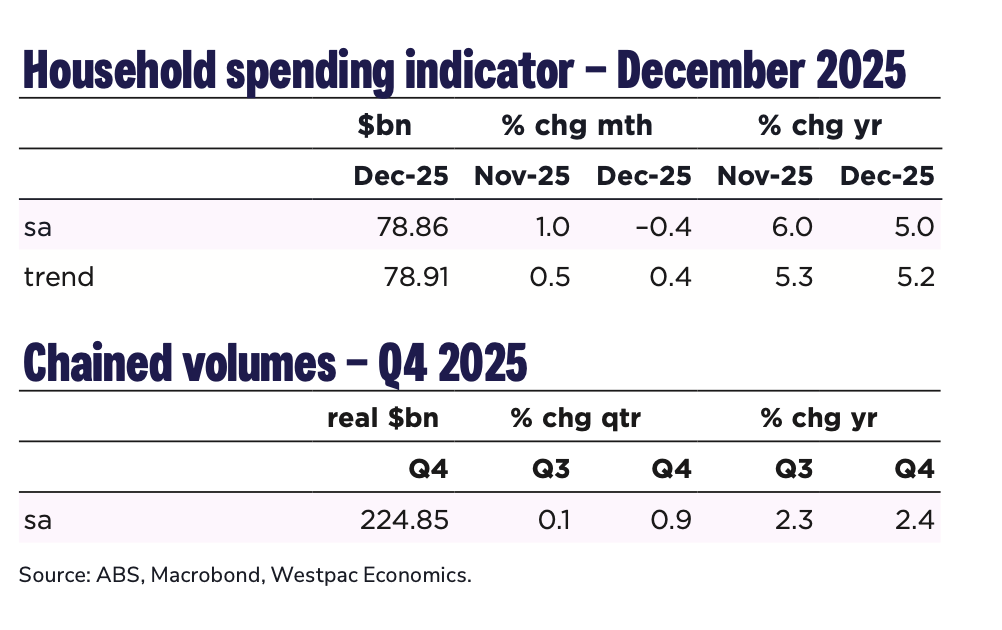
In a Westpac economic commentary, economist Neha Sharma (pictured left) described the December fall in the household spending indicator as “the first fall since mid‑2024”, but stressed that the quarterly picture remains robust.
Nominal spending rose 2.2% over Q4 – the strongest pace in three years – with volumes up 0.9% and 2.4% over the year, signalling that Australians are still increasing the amount of goods and services they consume, even as they become more selective.
Breaking down the figures by state, December weakness was centred on Victoria and New South Wales, with Western Australia also posting a modest decline, while Queensland and South Australia recorded gains, and real spending growth over the quarter was positive across all states. That points to ongoing opportunities in more resilient local markets, even as the south‑eastern states cool.
On the demand side, the sentiment story is more challenging. The Westpac–Melbourne Institute Consumer Sentiment Index slipped 2.6% in February after RBA delivered its first rate rise in more than two years.
Westpac's Matthew Hassan noted that the hike “has put renewed pressure on finances, dented attitudes towards major purchases, and raised concerns about medium-term prospects for the economy.”
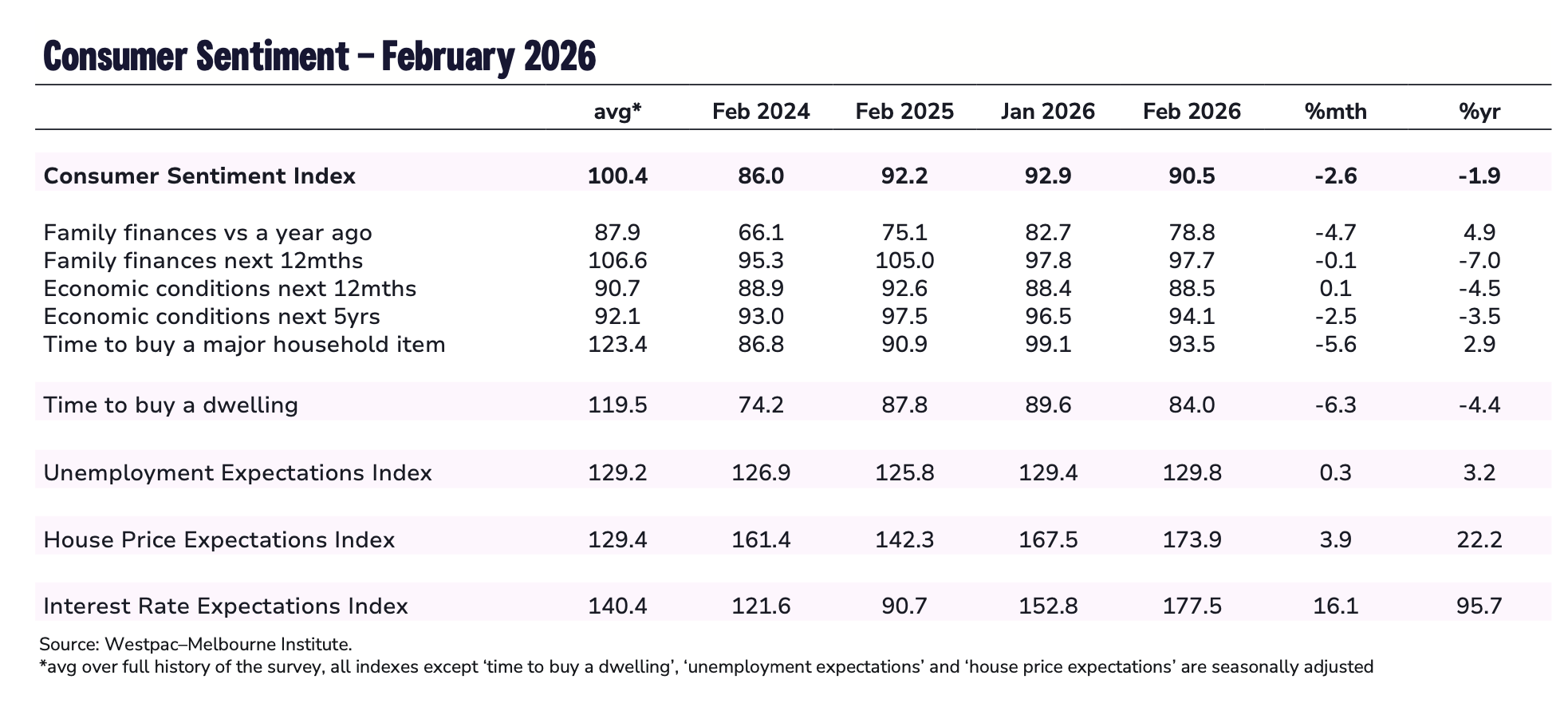
Yet housing remains a key bright spot for brokers. The ‘time to buy a dwelling’ index has dropped to its lowest level since late 2024, but house price expectations have climbed to a 15‑year high.
That mix of affordability stress and fear of missing out is likely to keep first‑home buyers under pressure, while encouraging investors and upgraders to move quickly – creating a critical window for brokers to step in with sharper rate strategies, refinance options, and tailored borrowing structures as 2026 unfolds.
Get the hottest and freshest mortgage news delivered right into your inbox. Subscribe now to our FREE daily newsletter.