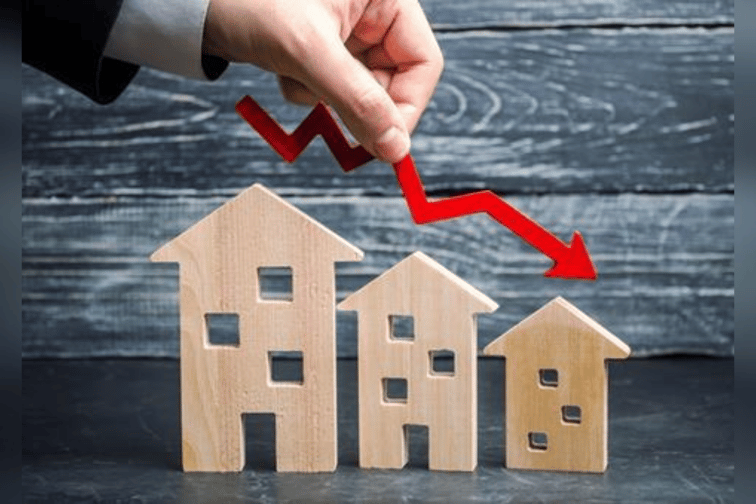
As geopolitical tensions flare, trade war threats linger and cost-of-living pressures mount, fears are building that the world could be sliding toward another financial reckoning – not unlike the Global Financial Crisis of 2008. History suggests every generation faces a correction of some kind – the ’70s housing squeeze, the dot-com crash, the GFC. So is the next reset on the horizon? And if it is, what would it mean for Australia’s overheated housing market?
"I don't think we're overdue for an adjustment in housing prices," Tim Lawless, executive research director Asia–Pacific at Cotality, the company formerly known as CoreLogic, said during a conversation with Tony MacRae, chief commercial officer at Bluestone Home Loans.
While he acknowledged the significance of past downturns, Lawless pointed out that Australia’s steepest property slump didn’t happen during the GFC – but rather between 2017 and 2019, amid credit tightening triggered by the Royal Commission and macroprudential measures.
"[That] was a larger fall in values than the GFC, mostly because we didn't see a lifeline for under the market like stimulus we saw through the global financial crisis," Lawless said. "It's pretty rare you see the strain housing values fall by more than sort of 10% to 15% from peak to trough. The GFC was pretty short and sharp."
Still, he underscored a pressing issue: "we have a very unaffordable housing market."
In fact, Australia’s property prices have been elevated for so long – and continue climbing – that some are questioning whether they’re sustainable. Economists note that it now takes upwards of eight years' salary to buy a home. While Sydney and Melbourne have long been out of reach for many buyers, median house prices in other capitals – including Brisbane, Adelaide and Canberra – have now pushed past the $1 million mark.
"I think, probably, a good outcome would be that housing values actually just stabilize for a period of time, at least relative to incomes," Lawless said. "Let incomes grow more so than what housing values do, helping to restore some of that balance."
As for talk of a collapse, Lawless was clear: here’s what would need to happen to make that a reality.
"You'd probably have to see a real weakness emerging in the labor markets, to see arrears a lot higher, maybe a real pick up in construction activity, for a more significant decline in housing values to occur," he said. "I think a more realistic scenario is probably one of a more moderate, sustainable rate of growth as housing supply remains low. And then gradually, we will see a supply response once we get through this bulge of infrastructure projects. And supply is, hopefully, supported by stronger labor markets in the construction space. There is absolutely going to be a supply response. It's just still, still a long way away, unfortunately."
Meanwhile, global uncertainty – from Wall Street swings and tariff threats to unrest in the Middle East – have been top of mind for many Australian homeowners.
With fuel prices spiking globally, there are renewed concerns about inflation, both in the US and around the world. In Australia, petrol prices have also risen, with economists warning that sustained higher fuel costs could increase inflation over the medium to long term. Shipping and freight costs are climbing as well, while Australian markets remain volatile.
The Reserve Bank of Australia (RBA) has signaled it may pause interest rate cuts if inflation does not remain within its 2% to 3% target band. While the most recent quarterly consumer price index (CPI) reading stayed within that range, persistently high fuel prices could feed through to broader price pressures, potentially stalling disinflationary efforts.
This could lead to delays in further interest rate cuts. Many economists and some lenders are still anticipating reductions at the central bank’s July meeting. However, if rates remain elevated, it could limit buyer demand and keep price growth subdued. That’s good news for existing homeowners holding onto equity, but it won’t help first-time buyers struggling to break into the market. And rising building costs are only making Australia’s housing crunch worse.
"There are so many moving parts out there," Lawless said. "We've got rates coming down; inflation is back in the target zone. But we've also got these headwinds around global uncertainty, Liberation Day [tariffs], and now we're seeing a lot more in the way of conflict in the Middle East. So I think there is certainly some complexity under the surface."
Another concern is potential housing crash Stateside – and what it could mean for Australia's property markets. But Lawless said those fears are "a little bit overplayed."
He pointed out that today’s landscape looks nothing like the run-up to the GFC, when US house prices and construction were booming.
"We're certainly not seeing the same sort of lead up into the US market now," Lawless said. "There is some upwards pressure on prices, but nothing too extreme, and we're not seeing an overbuild either. A lot of the concern about the US market probably comes back to the risk of higher inflation amid tariff conversations, [and] generally low sentiments, and just the uncertainty related to global geopolitical risk, as well.
"My guess is – considering most US borrowers are going to be on a 30-year fixed rate loan – we haven't really seen the flow through of lower rates impact on the market, like it does here in Australia," he said. "We have a fairly immediate influence from cash rate changes here – whereas in the US, it's much more muted, and it tends to impact things like refi activity much more."